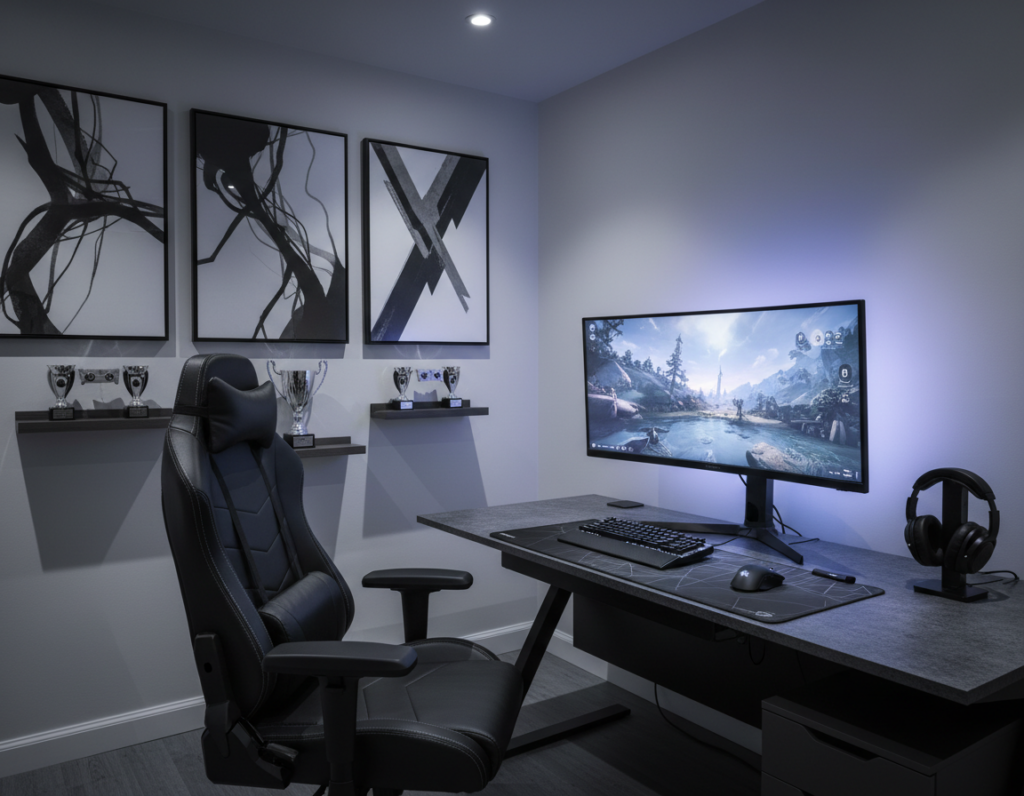
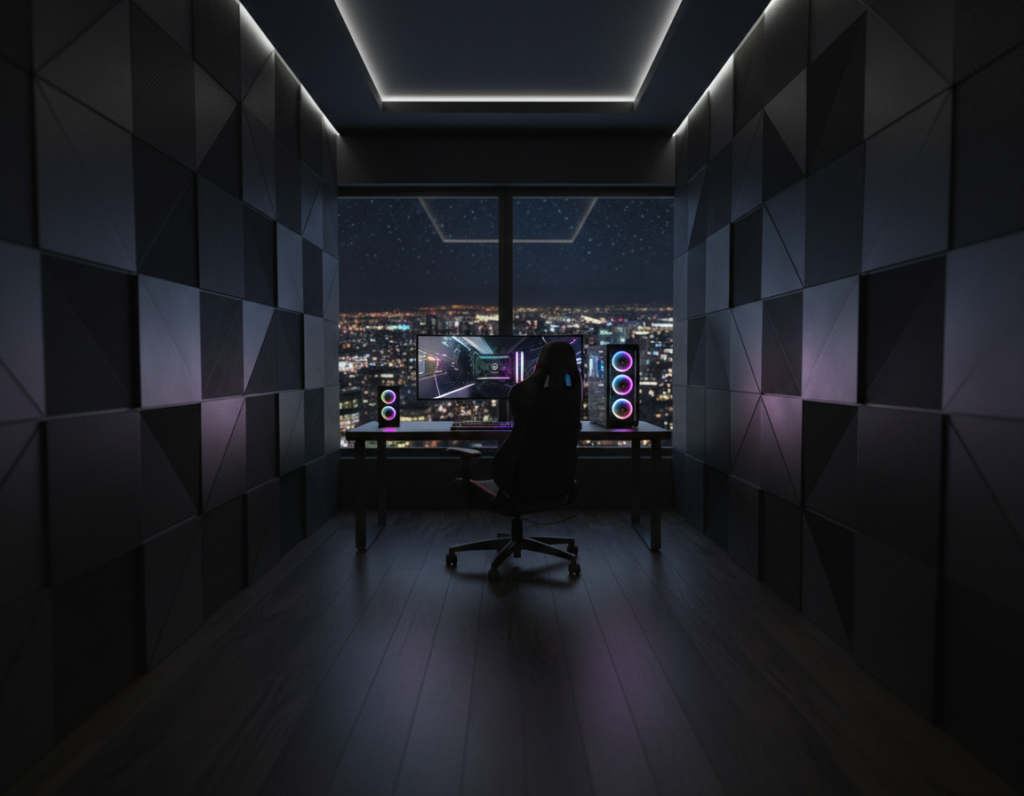
Choosing dark paint can turn an ordinary space into a cinematic game hub. It gives a crisp view of screens and creates contrast with lighting. Many homeowners convert basements or garages into a high-end media area using deep tones.
Before committing, they should consider ceiling height, floor materials, and overall interior design. Brick textures, wainscoting, and wood trim add depth so the space feels intentional, not closed in.
Designers suggest pairing dark finishes with grey accents, metal fixtures, and strategic light sources. Carpet or layered rugs soften acoustics while art and a small bar keep the area lively.
Expect a dramatic, theater-like atmosphere when done right. Planning color balance and finishes helps the house feel cohesive and the game setup perform at its best.
The Aesthetic Appeal of Black Walls for Gaming Room Setups
Dark finishes simplify visual clutter and put the view of the screen at center stage. This effect makes the game area feel like a small theater and improves contrast on displays.
Real projects show the impact. Ben Stokes converted a triple garage into a high-tech golf simulator, proving deep paint can elevate a functional garage into a focused media space.
- Bates Joinery’s Christchurch design pairs black walls with grey floors and a metal fireplace surround to create a sophisticated game room vibe.
- Dark wall paint helps maintain a clear view of monitors and projectors, an advantage in dedicated game rooms or basements.
- Adding wood accents, brick textures, carpet, art, or wainscoting breaks up monotony and keeps the home space warm.
When planning, designers balance ceiling height, light placement, and floor materials to avoid a closed-in feel. Smart use of grey fabrics, a small bar area, and layered lighting completes the design.
Essential Design Considerations for Dark Interiors
How the ceiling meets the floor dictates whether a deep palette feels cozy or cramped. This relationship shapes scale, sight lines, and the overall mood of a game space. Simple choices in trim and finishes can change how the view reads from any seat.
Ceiling and Floor Coordination
A lower ceiling painted in a darker tone makes a space feel intimate and theater-like. Pairing that with grey or concrete floors keeps the floor plane visually light without losing contrast.
Studio Black Interiors used black wall cladding in a Forde home to create a snug corner by the fireplace. The custom joinery framed the bench and niche so the area reads as intentional, not boxed in.
- Dark ceilings + grey floors = intimate, controlled sight lines.
- Wood trim, tile accents, or a long oak bench add warmth and architectural balance.
- Concrete or tile floors work well in a basement or garage conversion to anchor heavy finishes.
Managing Natural Light
Natural light must be managed carefully. A well-placed window can highlight art or a media wall. But too much glare defeats a focused game view.
CDC Studio’s Cambridgeshire library shows how concrete floors and layered lighting can tame strong daylight while keeping the space functional.
“A controlled mix of natural and artificial light preserves contrast and keeps the space comfortable.”
For practical planning and to learn more about assessing light and scale before painting, see this guide on how to paint a room dark.
Integrating Textures and Lighting to Enhance the Space
Combining natural grain and industrial metal creates visual interest in deep-hued interiors. This approach keeps a dark palette from feeling flat while supporting a functional setup.
Incorporating Wood and Metal Accents
Wood elements soften the mood. MR.MITCHELL’s large game room in Melbourne uses a wood-burning stove and timber accents to warm dramatic walls.
RNDR studio proved that detail matters. Their mezzanine space pairs wainscoting with medium hardwood floors to add depth and texture.
- Metal fireplace surrounds and fixtures add contrast without clutter.
- Benches, display niches, and trim define a corner in a basement or garage conversion.
- Grey floors or tile accents help reflect light so the space avoids feeling like a cave.
Lighting is essential. A black ceiling can amplify drama, but targeted light keeps the game area usable every day. Thoughtful art placement and a small bar or bench bring balance and purpose to the house plan.
Final Thoughts on Choosing a Dark Palette
A deep palette can turn an ordinary space into a focused, cinematic corner that suits many household layouts.
Choose finishes with intent. Consider existing floors — hardwood or grey carpet changes how the walls and ceiling read. Plan lighting and art so the view stays crisp and comfortable during play.
Some enthusiasts add specialty paint or an old Home Depot blue that reacts under blacklights to give the ceiling a playful glow. Whether converting a basement, garage, or spare room, balance textures like wood and metal to prevent the interior from feeling flat.
With careful planning, a dark scheme makes the game room feel professional and intentionally designed. Small touches — a bar, layered light, and select art — complete the house plan.