Designing a dedicated space starts with clear choices that reflect a player’s personality. A well-planned approach helps turn a bare wall into a curated display that supports focus and style.
The market shows this trend: gaming posters sales are rising, and the sector is expected to reach $728.3M by 2033. With gaming valued at $188.8 billion in 2025, more enthusiasts invest in quality prints and smart decor.
Practical choices matter. They balance art, lighting, and furniture so the desk area stays functional. A simple pairing of framed artwork and subtle lights can add depth without clutter.
Ultimately, the goal is to create a cohesive area that feels like an extension of identity. With thoughtful placement and a tight color scheme, a small room can look organized and inviting.
The Importance of Visual Identity in Gaming Spaces
A clear visual identity turns a play area into a purposeful, welcoming environment. It helps the room feel intentional and reduces clutter by guiding choices for art, lighting, and decor.
Design matters because many players are adults now; DemandSage cites ESA data showing the average gamer is 36 years old. As a result, rooms often favor refined art and cohesive decor over random displays.
“Personalizing a space improves belonging and well‑being.”
Research from the Joint Center for Housing Studies supports that claim: tailored spaces boost comfort and a sense of home. A unified scheme lets posters and artwork act as a visual thread that ties the entire environment together.
- Establishes a consistent theme for the room and equipment.
- Makes the space an extension of a player’s interests and game history.
- Helps lighting and furniture feel integrated rather than separate elements.
Selecting Artwork That Matches Your Gaming Style
Artwork selection sets the tone for a space and ties the physical setup to in‑game worlds. Choosing pieces that match preferred genres ensures the room feels intentional and consistent.
Anime and JRPG Themes
Anime and JRPG prints remain top picks for many setups. They offer a vibrant color palette and clear character focus that brightens walls without clutter.
Bold line work and high-contrast designs keep visuals readable under ambient lighting. Selecting characters and scenes from favorite games helps shape the room’s atmosphere and identity.
Racing and Automotive Decor
Sim racing fans often favor automotive decor with clean backgrounds and dramatic angles. Those designs tie the physical rig to the room’s visual identity.
Industry trends show demand for high-quality prints: the gaming posters market reached $270.8 million in 2023 and continues to grow. Curate pieces to reflect personal tastes so walls feel like a natural extension of play.
- Pick a consistent color palette to unify separate pieces.
- Match themes to lighting for a cohesive atmosphere.
- Prioritize bold artwork that reads from afar.
Strategic Planning for Your Gaming Poster Wall Layout
A well-considered backdrop transforms a monitor area into a polished focal point. Start by mapping the gaming poster wall layout before hanging anything.
The backdrop zone above the monitor should sit 6–12 inches higher than the screen. That gap creates visual balance and keeps the desk area tidy.
For single-monitor setups, choose a centered piece between 18×24 and 24×36 inches. This size acts as a clear focal point for the room without overwhelming the space.
When building a gallery wall, keep frame spacing consistent. Even gaps make a collection read as intentional and professional.
“Proper placement defines the backdrop zone and keeps your setup uncluttered.”
- Plan art so it complements lighting and desk gear.
- Use consistent frames to tie separate pieces together.
- Keep the focal point aligned with the monitor to support streaming or play.
These steps help ensure the walls highlight art and enhance performance, not distract from it.
Coordinating Wall Art with RGB Lighting Effects
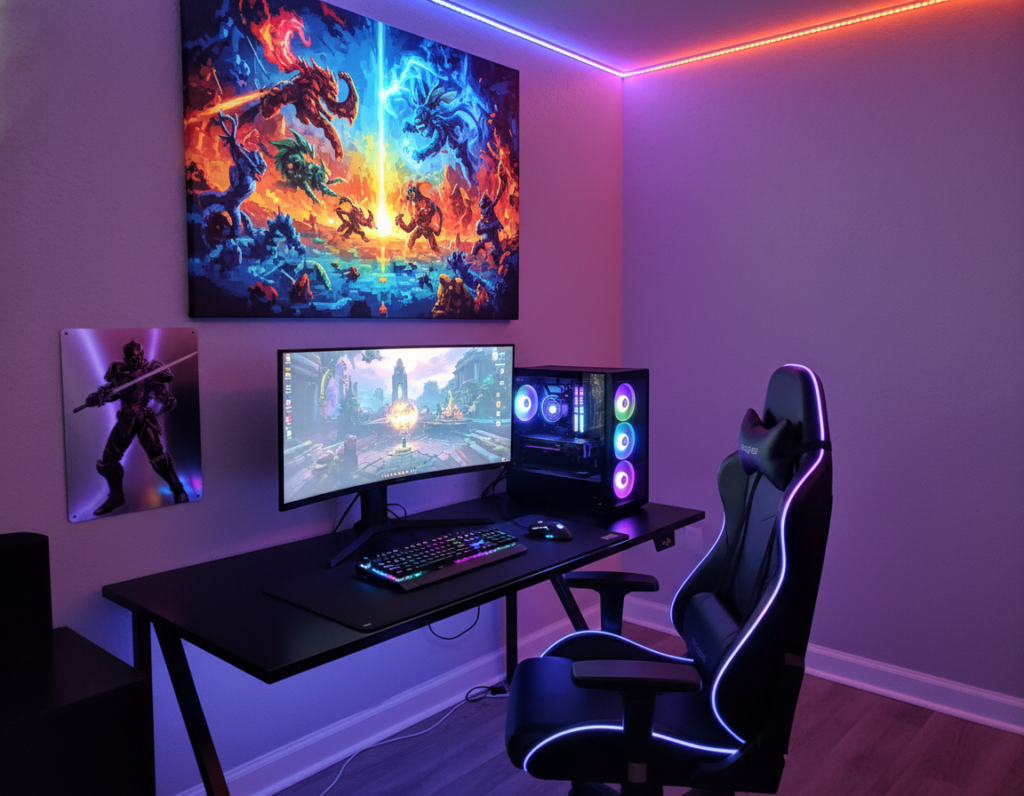
Strategic color from LED strips transforms flat prints into three‑dimensional displays. This method helps art and screens feel connected in a shared space.
With 3.6 billion active players using RGB as a standard, adding led strips is now an expected approach for many gaming rooms. A simple strip placed above a frame and angled about 30 degrees creates a clean spotlight effect for under $15.
Choose prints with darker backgrounds and selective highlights. These pieces gain depth under colored lighting and make decor feel layered rather than busy.
Practical tips:
- Use led strips behind desks or monitors to link the desk and the art.
- Match the color palette of posters and frames to the lights for a cohesive setup.
- Balance saturation so artwork reads clearly during daytime and at night.
“Proper lighting turns a standard wall into a centerpiece that defines the room’s aesthetic.”
Budgeting for a Professional Gaming Room Aesthetic
Budget choices shape whether a room feels like a casual setup or a polished studio. Proper planning helps scale a project from a starter level to premium gallery work without wasting money.
Starter Tier Options
At the starter level, one or two posters for $20–$50 can transform the look of a space. A single high‑quality piece often outperforms many random prints.
Tip: Pick a clear color scheme and hang the print above the desk for instant impact.
Mid-Range Cohesive Sets
For mid-range budgets, plan for coordinated art sets and invest in simple black or white frames that cost $8–$15 each. Frames protect prints and give a cleaner, more professional look.
This level ties lighting, color, and frames together so multiple artworks read as one composed gallery.
Premium Gallery Investments
Premium work often costs $150+ for a multi-piece composition. This level requires planning the entire wall as a single statement.
“Investing in quality frames ensures posters remain protected and look professional.”
- Scale spend by level to match goals.
- Start with one great artwork if budget is limited.
- Use consistent frames to make a modest collection read expensive.
Optimizing Your Backdrop for Streaming Success
Smart placement of art and lighting gives a streaming setup clear visual hierarchy. For a photographer-like frame, keep 15–25% negative space around the webcam area so the background doesn’t compete with the facecam and the game feed.
They should keep 2–5 feet between the back of the chair and the wall. This distance prevents the scene from feeling cramped and keeps depth on camera.
Choose high-contrast artwork with bold shapes so pieces read clearly on low-resolution streams. Avoid covering every inch of the wall; breathing room makes the room feel intentional.
- Place key pieces where the camera shows them without blocking the desk or screen.
- Leave negative space to prevent distractions and support branding.
- Balance lighting so art, screens, and the streamer share a consistent atmosphere.
“A clean, recognizable backdrop keeps viewers engaged and reinforces a creator’s brand.”
For inspiration on dynamic backgrounds and practical setups, see this creative stream background guide.
Creative Display Techniques for Modern Setups
A curated cluster of framed art can change a small setup into a gallery-caliber display. This approach balances form and function so the desk area looks intentional and neat.
For best results, arrange 4–8 pieces in a grid or salon-style cluster. Keep spacing consistent at 2–3 inches between frames to maintain a clean, minimalist grid.
Gallery Wall and Grid Arrangements
Use simple black or white frames to unify varied artworks. Matching frames makes different sizes read as one composed collection.
Place led strips behind the frames to add depth. A subtle LED glow creates a futuristic effect and ties art to the room’s lighting.
“A well-planned gallery wall turns separate pieces into a single, defining color palette for the space.”
- Group 4–8 pieces to maximize visual impact.
- Keep 2–3 inches between frames for a tidy grid.
- Mix art and posters to craft a unique color palette.
- Use led strips behind frames to highlight edges and add atmosphere.
Tip: Experiment with small shifts before drilling holes. Trial arrangements on the floor or with paper templates above the desk to find the best look.
Incorporating Collectibles and Shelving for Depth
Adding shelves and collectibles brings three-dimensional interest that photos alone can’t achieve.
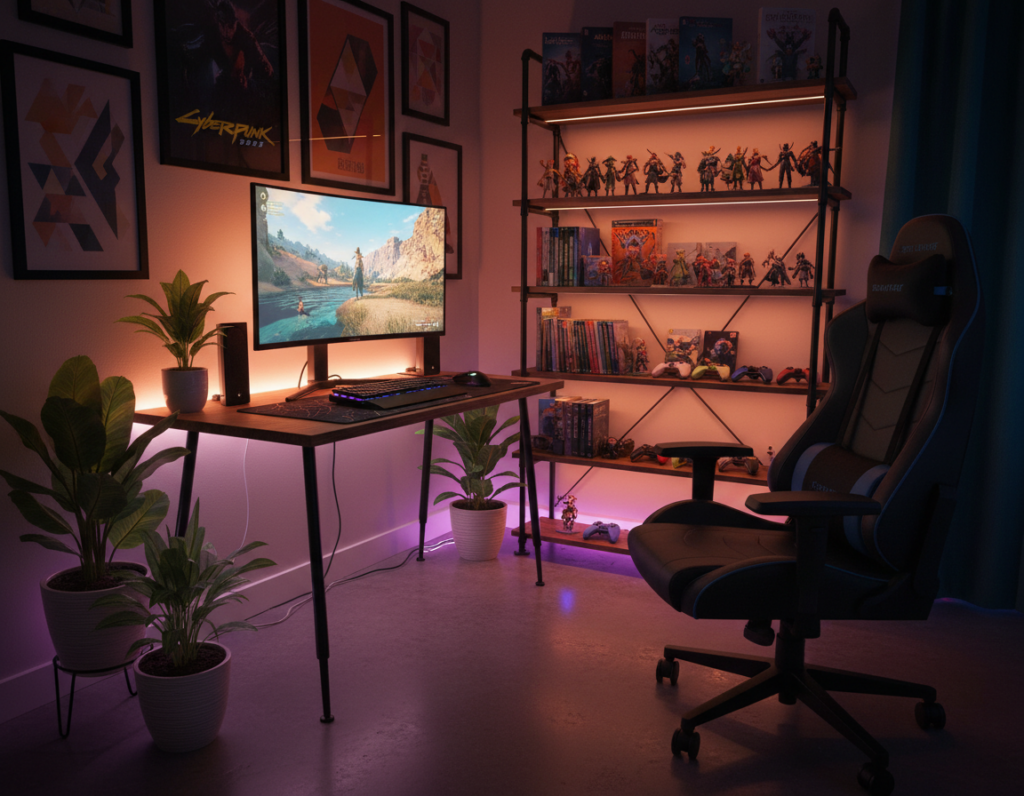
Install floating shelves on the wall to display action figures, retro consoles, and limited-edition boxes. These shelves create physical layers that lift artwork off a flat backdrop and add movement to the space.
Use LED strips along shelf edges to highlight pieces and guide the eye. A soft color wash from led lighting can make collectibles read like part of a gallery rather than clutter.
Combine a gallery wall with staggered shelving to balance framed art and physical items. This mix keeps surfaces functional while turning the room into an immersive headquarters.
- Showcase consoles and controller replicas on shallow ledges for easy access.
- Place taller figures at ends to frame grouped prints and create visual flow.
- Use consistent shelf depth and spacing to keep the display tidy and professional.
“Shelving adds real depth and organization, making a gaming room feel curated and personal.”
Essential Care and Maintenance for Your Prints
Caring for printed art keeps a room looking fresh and intentional for years. Small habits prevent fading and warping. They also protect the investment in your décor.
Keep prints out of direct sunlight and away from heaters or vents. Excessive heat and UV exposure drain color and bend paper over time.
When framing, use acid-free mats and UV-resistant glass or plexiglass. These choices block harmful light and reduce chemical damage to the artwork.
- Dust frames with a soft cloth every few weeks to keep surfaces clean.
- Check for shifting or loose hangers and adjust to keep the gallery tidy.
- Monitor humidity and avoid damp spots to protect prints from moisture.
- Rotate pieces occasionally to minimize uneven light exposure.
Proper maintenance of art and frames is a small effort with big payoff. It preserves color and keeps walls looking sharp. Regular checks catch issues early so the display stays professional and long-lasting.
Conclusion
Finishing touches bring together artwork, lighting, and furniture into a clear, personal space.
They should choose one strong piece of artwork or build a small gallery wall to define the room’s look. Well-planned placement makes the space feel like an extension of the player’s personality.
Balance LED accents and decor so the final effect feels immersive and tidy. Whether a casual fan or dedicated gamer, starting with one high-quality print and expanding slowly keeps the setup professional and organized.
Follow these steps and the room will better support play, streaming, and the pursuit of the next high score.