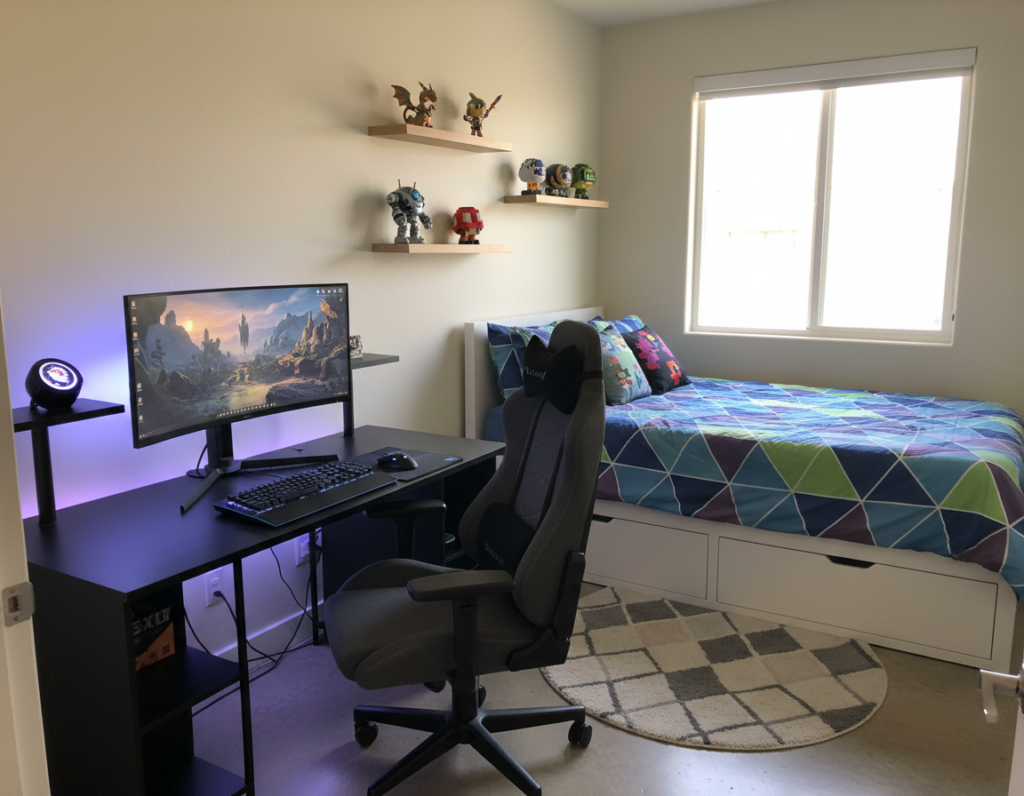
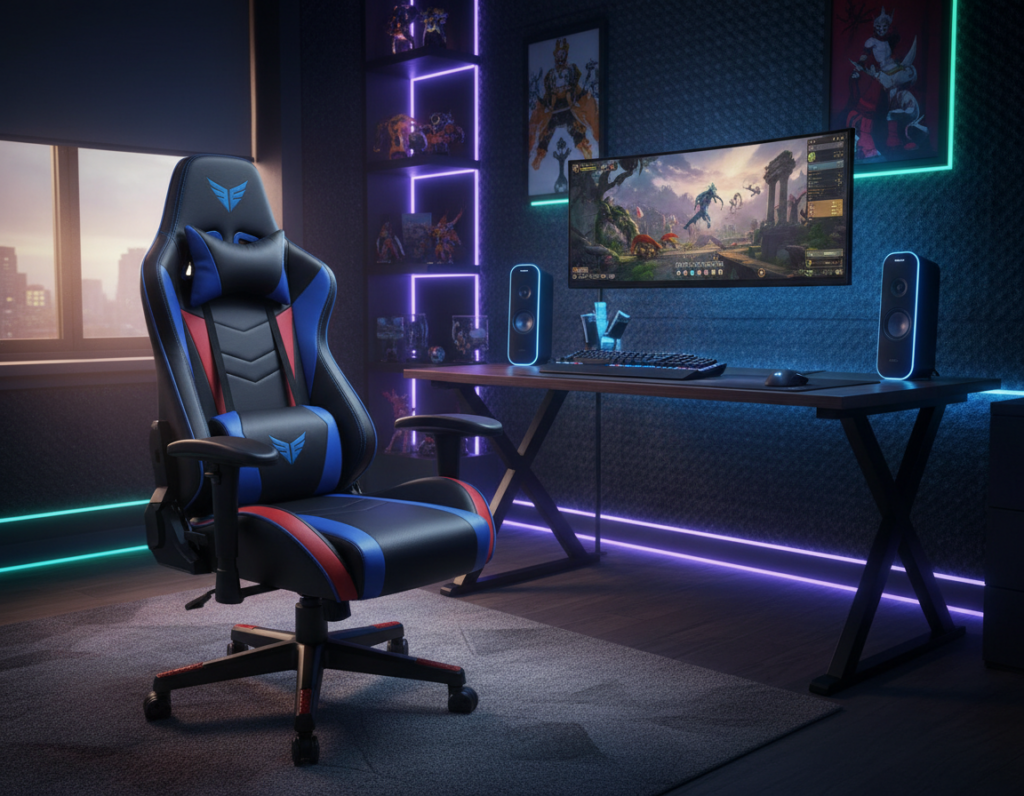
Choosing the right desk shape is the first step toward a tidy, efficient setup. Eureka Ergonomic offers 11 distinct models to match varied needs, so selecting the right option matters for room flow and gear placement.
The right desk supports heavy monitors and accessories and keeps everything stable during long sessions. It also helps with posture and makes standing options easy to consider.
Good cable management and integrated power or extension ports reduce clutter and free up surface area. Check the weight capacity and exact inches to confirm the size fits the room and the monitors.
Design and build affect daily comfort. Steel frames, smart storage, and RGB features add function and style. A clear plan for cables, keyboard placement, and storage creates a focused area that improves the overall gaming experience.
The Importance of Choosing the Right Gaming Desk Shape
Desk geometry changes how a player reaches monitors, mice, and keyboards during play. The right layout affects sightlines to monitors and the comfort of long sessions.
Surface area and size determine where the keyboard and mouse sit. That placement matters for response time in competitive play and for everyday comfort.
Many models use a steel frame for higher weight capacity and a stable build. Surface material — wood or composite — affects durability and feel.
“A properly sized station keeps monitors at the correct height and makes cable routing simple.”
- Shape dictates usable space for monitors and other gear.
- Choose options with integrated power or extension ports to save room and lower price over time.
- Consider standing solutions for posture and flexible height adjustment.
- Good cable routing keeps cables tidy and the desktop clear for focus.
Picking the right option now lays a foundation for future upgrades and a cleaner, more functional setup.
Evaluating Your Available Room Space
Start by mapping the room to see where a new setup will sit and move. Accurate measurements prevent tight fits and wasted time. Eureka Ergonomic offers models in the 60”–70” range, so confirm the footprint before you buy.
Measuring Your Corner Space
Measure wall length, corner depth, and clearance in inches. Note door swings and walkways so the chosen corner option fits without blocking traffic.
If an L-shaped layout is under consideration, measure both legs and the depth to be sure the size works with other furniture.
Planning for Peripheral Placement
Sketch where monitors, keyboard, and power strips will sit on the desktop. A sturdy steel frame with high weight capacity is best for multiple monitors and heavy gear.
“Plan peripheral locations first to maintain reach and comfort during long sessions.”
- Check cable and power management features to hide cables and extension cords.
- Consider desk height and a standing desk option for posture and flexibility.
- Compare price and build across models to match budget and desired features.
Why the Best Gaming Desk Shape Matters for Performance
A well-planned workstation layout keeps essential controls and screens within instant reach.
Performance-oriented desks are engineered to make esports play and streaming smoother. A setup that places the keyboard, mouse, and monitor within natural reach reduces wasted motion and shortens reaction time.
Stability matters. A sturdy desktop and solid frame support multiple monitors and heavy gear so the surface does not wobble during intense matches.
“A desk that keeps everything within reach allows for faster reaction times and more efficient gameplay during intense matches.”
Good cable management and integrated power or extension options prevent cords from interfering with movement. Adjustable height features also help sustain comfort and reduce fatigue.
- Shape affects access to keyboard and mouse and the overall workflow.
- Durable build supports weight from multiple monitors and peripherals.
- Enough space keeps gear organized and minimizes distractions.
Comparing price and features across models ensures the right balance of range, build, and power options for a pro-level experience.
Benefits of the L-Shaped Desk for Multi-Monitor Rigs
An L-shaped layout unlocks more usable surface and smarter room flow for multi-monitor rigs. This design turns a corner into productive space and gives clear zones for play and work.
Corner Utilization
By seating the setup in a corner, the L layout frees up open floor space across the rest of the room. It makes traffic flow easier and helps keep larger rooms feeling organized.
Dual-Surface Multitasking
The split desktop enables one side for a primary monitor array and the other for a laptop, paperwork, or streaming gear. Users can switch tasks without moving equipment.
Support for Heavy Rigs
Many L-shaped models include a robust frame and high weight capacity to support multiple monitors and heavy peripherals. Integrated cable management and power extension features keep cords tidy and accessible.
“An L layout offers more surface area and dedicated zones, improving reach and reducing clutter.”
- More surface area than a standard rectangular desk for complex setups.
- Storage options like drawers and shelves simplify accessory organization.
- Ergonomic placement allows monitors to be angled for less neck strain.
- Options with RGB and standing desk compatibility match room aesthetics and height needs.
GTPlayer L-shaped models are on sale now—some up to 54% off—making this layout an economical choice for high-capacity setups.
Maximizing Efficiency with Rectangular Desks
A rectangular workstation delivers a wide, uninterrupted surface that simplifies layout and movement. It fits easily into a room and adapts to many setup styles.
Rectangular desks provide a clean, open desktop ideal for multiple monitors and large mouse pads. The flat surface supports long, precise mouse strokes and keeps peripherals aligned.
Many models include built-in cable management channels and power or extension options. This keeps cords tidy and frees up surface space for controllers and audio gear.
- Stable frames support monitor weight and reduce wobble during intense sessions.
- Simple form makes sizing to a room straightforward; measure inches to confirm fit.
- Available in many sizes and price points to match a budget and desired features.
“A wide, uninterrupted surface helps players and professionals focus by reducing clutter and improving reach.”
Ergonomic Advantages of Curved and Oval Surfaces
Curved and oval surfaces wrap the workspace so peripherals sit naturally within reach. This layout reduces repetitive twisting and helps players keep a neutral posture during long sessions.
Reducing Neck Strain
Rounded desktops allow monitors to sit in a gentle arc. That arc keeps screens at similar distances and angles so the neck does less work.
Positioning the keyboard and mouse on the curve aligns the arms and wrists in a more natural line. This reduces strain and supports longer, more comfortable play.
“An ergonomic curve keeps monitors and peripherals within an easy reach, cutting unnecessary twisting.”
- Posture improvement: Curved desks encourage a centered seating position that eases neck and shoulder tension.
- Stable support: Look for models with a sturdy frame and high weight capacity to hold multiple monitors and accessories.
- Cable management: Many rounded tops include integrated cable management to save space and keep the setup tidy.
- Fit and height: Verify the desk height and footprint to match the room and any standing desk plans within your budget.
Integrating Standing Desk Options into Your Setup
Adding adjustable height to a workstation lets users shift posture and focus without rearranging gear. GTPlayer offers electric standing desk models with dual motors for smooth, quiet transitions.
Standing setups let a user alternate between sitting and standing, which can boost posture and energy over long sessions. Dual motors keep monitors and peripherals stable when the height changes.
Proper cable management is essential for standing solutions. Cables must have slack and guided channels so power and data lines move freely without snagging.
“A reliable motor system and tidy cable routing maintain stability and make standing practical for daily use.”
- Adjustable height promotes better posture and reduces fatigue.
- Check weight capacity and build quality before buying to support the full setup.
- Compare price and features to match budget and desired options, like RGB and extra management tools.
Material Durability and Weight Capacity Requirements
Durable construction and surface choice define how long a workstation holds up under heavy use. Eureka Ergonomic models pair a solid steel frame with tough tops to meet the needs of serious players and streamers.
Steel Frame Construction
Steel frames provide the backbone for high-capacity setups. Eureka Ergonomic frames support between 100 and 200 lbs, so multiple monitors and heavy gear remain stable.
Frames with reinforced legs and crossbars reduce wobble. That stability matters when a user adjusts height or adds extra monitors and peripherals.
Desktop Surface Materials
Top materials range from classic wood to high-tech carbon fiber. Wood offers a warm feel and solid durability. Carbon fiber and composite tops resist scratches and are lighter for easy moves.
Surface quality affects cable management and long-term wear. Tops with integrated channels make routing power and data cables simpler and cleaner.
“A well-built frame and a quality top keep monitors level and the setup reliable under heavy loads.”
- Confirm the advertised weight capacity for your monitor count and other equipment.
- Look for built-in cable management to save desktop space and reduce clutter.
- Compare price and build to find the right balance of capacity and surface finish.
- Consider height and inches of footprint to ensure the unit fits the room and any standing plans.
Essential Cable Management Solutions for a Cleaner Area
Tidy cable routing turns a cluttered workstation into a focused, professional area. Integrated trays, grommets, and clips keep power and data lines organized and hidden. This gives the setup a polished look and reduces distractions.
Many modern gaming desk models include built-in holes and under-desk trays that make routing simple. A desk with these features saves time when adding monitors or peripherals and lowers the chance of accidental unplugging.
“Effective cable management is the key to maintaining a clean and functional gaming area.”
- Use trays and clips: They keep power and extension cords off the floor and out of sight.
- Route with grommets: Direct data cables through set ports to reduce snags and wear.
- Choose desks with channels: Built-in channels simplify setup changes and protect cables when you alter height or move gear.
Comparing price and features helps find the right balance of function and value. Proper cable management improves safety, preserves equipment, and makes the entire area easier to maintain.
Incorporating Storage Features for Better Organization
Built-in storage keeps controllers and headsets at hand and removes distracting piles from the desktop.
Many gaming desks include drawers and shelving that fit a dedicated setup. These features free surface space and make it easy to store headphones, controllers, and small peripherals.
Built-in Drawers and Shelving
Drawers provide hidden space for cables and accessories. Shelves hold larger items like consoles or spare monitors without crowding the main area.
- Organized space: Built-in storage keeps the workspace neat and quick to access.
- Reduced clutter: Accessories tuck away, which improves focus during long sessions.
- Integrated cable management: Many models combine storage with cable channels to protect cords when changing height.
- Evaluate features and price: Compare models to confirm storage capacity meets your gear and room space.
“A desk that combines storage and cable management makes setup changes faster and keeps the area ready for action.”
Aesthetic Considerations and RGB Lighting Integration
Color choices and lighting set the mood for a room and influence how a setup feels at night. Eureka Ergonomic offers finishes in Black, Oak, Walnut, and Pink so users can match their space without compromise.
RGB lighting integration is a popular option that adds atmosphere and lets users personalize illumination. Many models let players sync LEDs to peripherals or pick color zones for a coordinated look.
Proper cable management is essential when adding lights. Hidden power lines and clean routing keep the surface tidy and prevent distractions.
- Color and light matter: Choose a finish that complements monitors and decor.
- Custom RGB: Look for adjustable zones and control apps for scene setting.
- Function meets form: Desks with storage and cable channels maintain a clean aesthetic.
- Compare price and options: Find a model that balances features and value for the room.
- Impact: The right lighting can transform a setup into a polished, professional environment.
“A well-lit workstation blends style with function to enhance focus and immersion.”
Balancing Budget and Build Quality
Smart purchases balance cost with construction so a setup lasts through heavy use. When buying a gaming desk, buyers should weigh upfront price against how well the frame and top will hold up over time.
Many models in an affordable price range include useful features like cable management and sturdy frames. These features keep cables tidy and free up space so the area stays organized.
Durability matters. A well-built desk with a solid frame will support monitors and peripherals with less wobble and fewer repairs.
“Investing in a balance of price and build quality saves money in the long run.”
- Compare price and features: Look for models that include cable management and reinforced legs.
- Check long-term durability: Confirm weight capacity and frame materials before purchase.
- Prioritize value: A mid-range option often delivers the best mix of price and build for most gaming setups.
Customizing Your Setup for Long Gaming Sessions
A tailored workstation keeps focus high and physical strain low during extended play. Choosing the right gaming desk helps maintain good posture and reduces fatigue over long sessions.
Start by setting monitor height so the top third of the screen sits at eye level. Adjust surface depth to allow the keyboard and mouse to rest comfortably so the arms are relaxed.
Confirm the unit’s weight capacity. A stable top prevents wobble when multiple monitors and peripherals are used. Proper support improves the overall experience.
“Small ergonomic changes yield big gains in comfort and performance.”
- Choose a desk with enough surface space for arms and accessories.
- Pick adjustable height options to switch posture during long sessions.
- Plan cable routing to keep power and data lines tidy and out of the way.
- Compare price and features to match durability and long-term needs.
A carefully customized gaming setup becomes the heart of play. For layout ideas and options, see custom desk ideas to find models that balance comfort, space, and build quality.
Conclusion
A purposeful setup blends practical storage, solid construction, and tidy cable routing into one cohesive area. This clear, strong, choice helps keep gear organized and usable during long sessions.
By weighing space, build, and price, a buyer can select a gaming desk that fits the room and supports their routine. Good cable management and ergonomic planning protect posture and reduce distractions.
Whether they pick an L-shaped or a straightforward rectangular option, the right desk provides a stable foundation for monitors and peripherals. The correct pick improves comfort and the overall play experience.
Investing in quality now saves time and upgrades later, making the setup the reliable center of the room for years to come.